Skip to content


Whether you're a high-performance athlete or simply staying active, you've likely experienced delayed onset muscle soreness (DOMS) after training. DOMS typically occurs after intense exercise or when the body is exposed to new or unfamiliar movement patterns.
This soreness is part of the body’s natural adaptation process. During training, muscle fibers undergo microscopic stress, triggering repair and strengthening. However, this process can also lead to stiffness, reduced mobility, and temporary performance decline — often peaking 24–72 hours post-exercise.
Supporting Muscle Recovery
Effective recovery strategies help the body repair more efficiently and maintain consistency in training. Common approaches include:
- proper nutrition
- hydration
- sleep and rest
- mobility and stretching
- manual therapies (massage, compression)
- red light therapy
How Red Light Therapy Supports Recovery
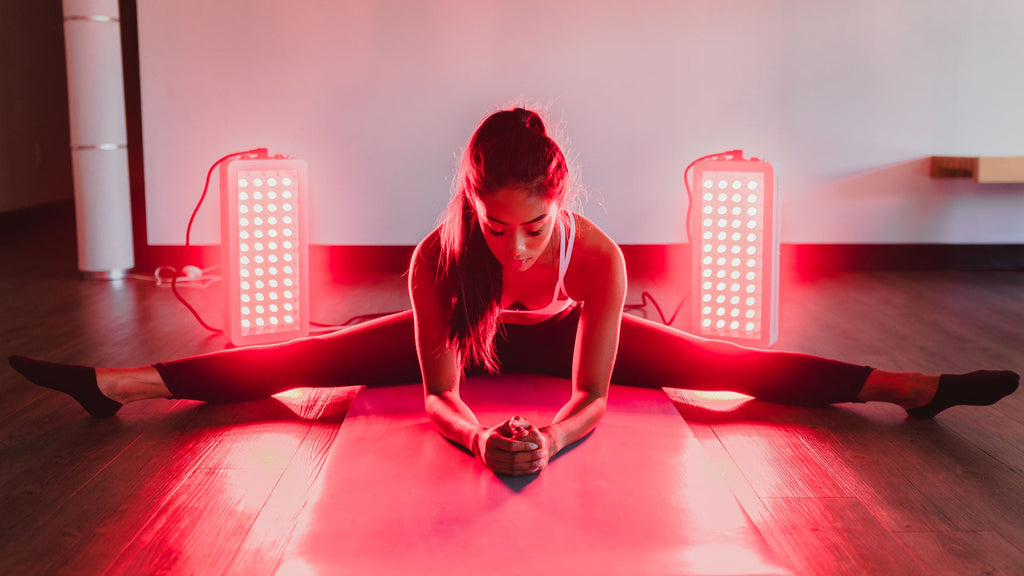
Red light therapy uses specific wavelengths of red and near-infrared light — commonly around 660 nm and 850 nm — to interact with the body at a cellular level.
When absorbed by the mitochondria, this light may help support cellular energy production (ATP), circulation, and overall recovery processes. This is particularly relevant for muscle tissue following exercise, where energy demand and repair activity are elevated.
As a result, red light therapy is commonly used to support:
- post-exercise muscle recovery
- reduction in muscle soreness
- circulation and oxygen delivery
- overall recovery efficiency
Research in photobiomodulation has also explored its potential to support performance and recovery outcomes, including reduced fatigue and improved exercise capacity.
Read More: Our complete guide to red light therapy →
Choosing a High-Performance Device
Not all red light therapy devices deliver the same output or coverage. For recovery-focused use, factors such as wavelength accuracy, irradiance, and treatment area all play a role.
Higher-quality devices are designed to deliver consistent output across clinically relevant wavelengths.
Higher-quality devices are designed to deliver consistent output across clinically relevant wavelengths.
Explore Orion Light Panels →Orion panels are engineered with optimized red and near-infrared wavelengths, high output, and full-body coverage — designed to support consistent recovery and performance.