Skip to content


Hair loss is one of the most common concerns adults face, affecting roughly 1 in 4 women and 3 in 4 men in North America. Red light therapy for hair loss offers a non-invasive way to support your scalp, using specific wavelengths of light to energize the follicles that drive healthy growth.
This guide covers how red light therapy stimulates hair growth, who it suits best, how to use it at home and what to expect along the way.
What Causes Hair Loss & Thinning Hair?
Hair thins for many reasons, and most people experience a combination of them:
- Genetics: pattern thinning at the crown, part or hairline is the most common form in men & women.
- Stress: periods of high stress can push follicles into their resting phase early.
- Nutrition: hair relies on protein, iron and key vitamins to grow well.
- Hormonal shifts: pregnancy, postpartum and perimenopause all influence the hair cycle.
- Styling habits: heat, tight hairstyles and chemical treatments place strain on the hair and scalp.
Every hair follicle cycles through three phases: growth (anagen), transition (catagen) and rest (telogen). Thinning happens when follicles spend less time growing and more time resting, producing finer, shorter hairs over time. Supporting that growth phase is exactly where red light therapy comes in.
How Does Red Light Therapy Stimulate Hair Growth?
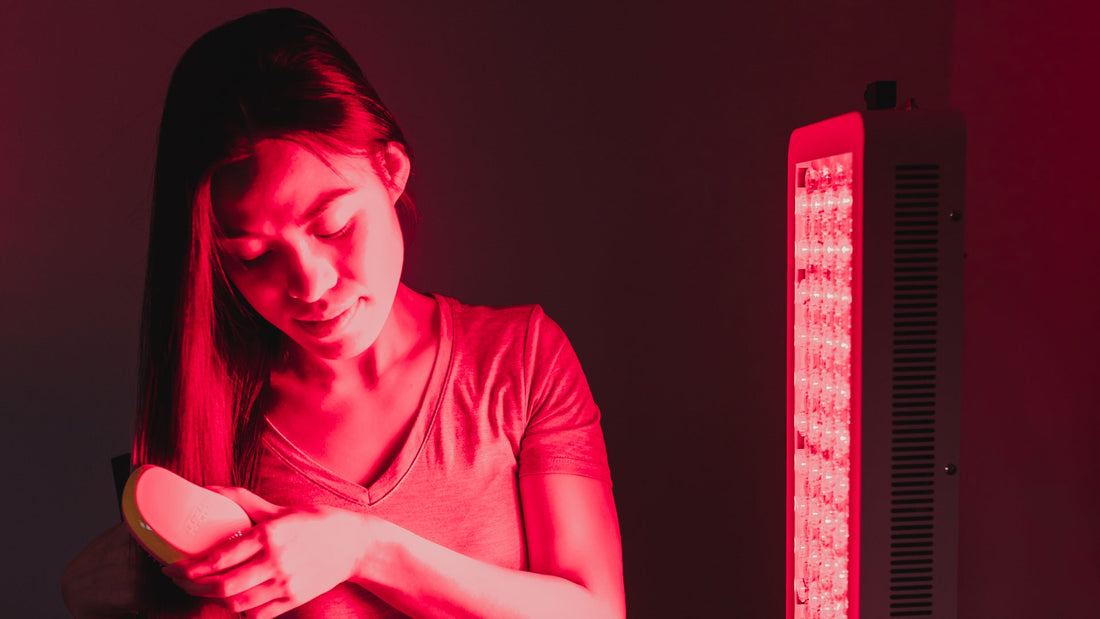
Red light therapy delivers concentrated red and near-infrared light to the scalp. Red light at 660nm and near-infrared light at 850nm reach the follicle at different depths, working together to support the cells responsible for growth.

How red and near-infrared wavelengths reach the hair follicle.
Cellular energy
Mitochondria are the powerhouses of your cells, producing adenosine triphosphate (ATP), the energy that fuels everything your body does. Red light is absorbed by an enzyme within the mitochondria called cytochrome c oxidase, helping cells produce more ATP. Hair follicles are among the most metabolically active structures in the body, so this extra energy supports them in staying in the growth phase for longer. Learn more about how red light therapy works.
Dermal papilla cells
At the base of every follicle sits a cluster of dermal papilla cells, which regulate how hair grows. Red and near-infrared light promote the proliferation of these cells, strengthening the foundation that each strand grows from.
Circulation
Red light therapy encourages the release of nitric oxide, which relaxes blood vessel walls and supports healthy blood flow. Better circulation means more oxygen and nutrients delivered to the scalp, and more efficient removal of waste from the area.
Scalp health
Healthy hair starts with a healthy scalp. Red light therapy supports collagen production, which strengthens the skin that anchors every follicle. Read more about red light therapy & collagen.
Does Red Light Therapy Work for Hair Growth?
Yes. Red light therapy is one of the most established at-home approaches to supporting hair growth, and light therapy is consistently linked to improvements in pattern thinning. Visible red light delivered by laser and LED sources supports increased hair counts in both men and women.
Results come down to three variables: the right wavelength, the right dose and consistent use over several months. Red light between 630 and 680nm is the gold standard for hair, with near-infrared at 810–850nm rounding out each session. For a full breakdown of each variable, read our guide to the best wavelength for red light therapy hair growth.
Red Light Therapy for Thinning Hair in Women & Men
Thinning looks different for everyone, and red light therapy supports both common patterns.
For women, thinning tends to be diffuse: a widening part, reduced volume at the crown or finer hair overall. Red light therapy is a gentle addition to a hair care routine during life stages like postpartum and perimenopause, when hormonal shifts affect the hair cycle.
For men, thinning typically begins at the temples or crown. Starting early, while follicles are still active, gives you the most to work with, so red light therapy is ideal at the first signs of a receding hairline or thinning crown.
In both cases, consistency is what counts. A few minutes several times a week, sustained over months, is what builds results.
Light Treatment for Hair Loss: Who It Suits Best
Red light therapy is best suited to gradual thinning, where follicles are still present and active but producing finer, weaker hair. It is less suited to a few specific situations:
- Scarred or damaged follicles: follicles permanently lost to injury, surgery or burns will not regrow.
- During chemotherapy: hair loss driven by chemotherapy or certain medications follows its own course. Speak with your care team first.
- Patchy or sudden shedding: see a dermatologist to understand the cause before starting any new routine.
Red light therapy works best as one part of a complete approach to hair health, alongside good nutrition, stress management and professional guidance where needed.
Support your scalp from home
Orion panels pair red & near-infrared light in a Health Canada Licensed device, Designed in Canada. Every panel includes a 60-day home trial, so you can build your routine before you commit.
Explore Orion PanelsHow to Use Red Light Therapy for Hair Growth at Home
An at-home panel makes it easy to fit sessions into your week. Follow these guidelines for the best results:
- Distance: position your scalp 12–18 inches from the panel.
- Session length: 5–10 minutes per area.
- Frequency: 3–4 sessions per week, on non-consecutive days. Lower-frequency routines outperform daily use for hair.
- Preparation: start with a clean, dry scalp, and part your hair so the light reaches the follicles directly.
- Positioning: tilt your head forward for the crown, and face the panel directly for the hairline and temples.
- Eyewear: wear the protective eyewear provided, since scalp sessions keep the light close to your eyes.
Your panel's power output, or irradiance, determines how much light reaches your scalp at a given distance. Keep your distance consistent from session to session so each one delivers a similar dose.
How Long Does Red Light Therapy Take to Work for Hair?
Hair grows roughly a centimetre a month, and follicles move through their cycle slowly, so patience is part of the process. Here's a realistic timeline:
- Weeks 1–8: little visible change. Some people notice temporary shedding as resting hairs make way for new growth.
- Weeks 8–16: early signs, such as fine new hairs along the hairline or crown.
- Weeks 16–26: changes in density and thickness become noticeable.
Take photos in the same lighting every four weeks. Month-to-month comparisons tell the real story.
Building a Complete Hair Routine Around Red Light Therapy
Red light therapy does its best work as part of a well-rounded routine. These habits give your follicles everything they need between sessions:
- Eat for your hair. Hair is built from protein, so include quality sources at every meal, along with iron-rich foods, omega-3 fats and plenty of colourful vegetables.
- Manage stress. Sleep, movement and downtime all help keep follicles out of an early resting phase. Your red light session doubles as a few quiet minutes to unwind.
- Style gently. Lower the heat on styling tools, loosen tight hairstyles and give your hair regular breaks from chemical processing.
- Care for your scalp. Cleanse regularly to keep follicles clear, and massage your scalp for a minute or two after each session.
- Stay consistent. Schedule your sessions on the same days each week, such as Monday, Wednesday and Friday, so the routine becomes second nature.
Small, steady habits compound over months, and so do the results. For more on staying the course, read why consistency beats intensity.
Frequently Asked Questions
Does red light therapy help with hair growth?
Yes. Red light therapy supports hair growth by energizing follicle cells, encouraging circulation to the scalp and helping follicles stay in their growth phase for longer.
Is red light therapy good for thinning hair?
Red light therapy is ideal for gradual thinning in men & women, especially when started early while follicles are still active.
What wavelength is best for hair loss?
Red light between 630 and 680nm, centred near 660nm, is the cornerstone wavelength for hair. Near-infrared at 850nm complements it.
How often should I use red light therapy for hair loss?
Three to four sessions per week, on non-consecutive days, for 5–10 minutes per session.
Does red light therapy work for a receding hairline?
Red light therapy supports the hairline best when you start at the first signs of recession, while follicles are still active. Face the panel directly so the light reaches the temples and front hairline evenly.
Can I combine red light therapy with other hair care?
Absolutely. Red light therapy pairs well with dermatologist-guided routines. Apply any topicals after your session, not before.
The Bottom Line
Red light therapy for hair loss gives your follicles the energy, circulation and scalp support they need to stay in their growth phase. Choose a device with red & near-infrared light, use it three to four times a week and give it at least 16 weeks. Consistency is what turns sessions into results.
Ready to start? Explore Orion's red light therapy panels, or dive deeper with our guide to the best wavelength for red light therapy hair growth.
This article is for general wellness information and is not medical advice.